
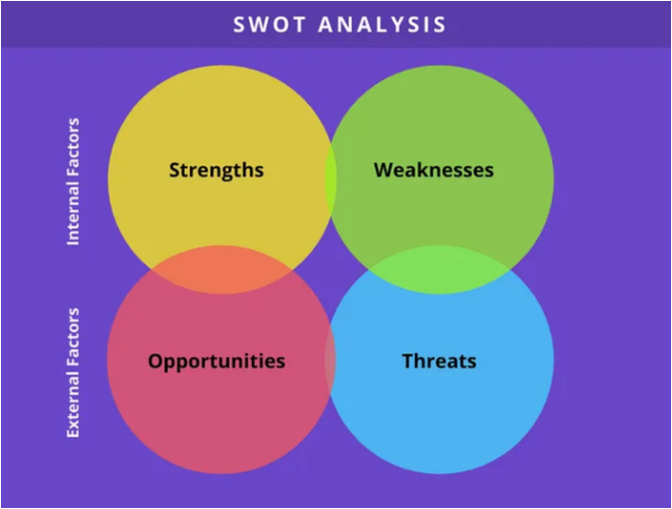
As we close out a very interesting year, now is the perfect time for a deep dive into the Strengths, Weaknesses, Opportunities, and Threats your small business will face in 2025.
Using the 4-Step SWOT Analysis makes strategic planning easy, even if you’ve never done it before. I often conduct a SWOT with my clients and the results always yield actionable results.
The 4 Quadrants Explained
Strengths and Weaknesses are the internal factors you have control over and can change, while Opportunities and Threats are external forces which can’t be changed, but must be adapted to.
When finished, the goal is to optimize the strengths, minimize or eliminate the weaknesses, while taking advantage of the opportunities yet understanding and preparing for the threats.
Here’s how to create your SWOT:
Strengths – What are the internal strengths of the organization?
Of course, strengths include revenues and money in the bank, but think broader. What are you and your team good at? What do you/they love doing? What is your competitive advantage? What resources do you have; or can you tap into? What about intellectual property? Your customer list? Market niche? Unique products or services? Does the business have a great online reviews? Great pricing? Happy employees? Ideal location? Serve an underserved market need?
Once all the strengths are identified, the goal is to build upon and maximize the strengths.
Example: Each time a customer tells you they’re satisfied with your product/service, send them the link to your Google Small Business review so they can tell the world how great they think you are. And, once they do, be sure to publicly give thanks for their review.
Weaknesses – Now, look at the internal weaknesses
For example, if you own a store, but it’s not in a great location? Or parking is terrible? Are you having trouble attracting new customers? Is the business under-capitalized or financially stressed? Is there a solid marketing strategy? Is there good engagement on your social platforms? Are you having trouble keeping or hiring exceptional employees? Is your business lacking the right team members to fill skills gaps?
When the weaknesses are out in the open, it can feel overwhelming, so prioritize according to your budget and goals.
Example: A family-owned health food store I frequented during the pandemic rearranged the layout so that their home-cooked ‘to go’ meals were up front, eliminating the need for customers to walk deep into the store. They’ve kept it this way ever since, and it turns out that it works much better for parking lot turnover too.
Opportunities – To uncover external opportunities, free-think without constraints
It could be a new product or service that fills a gap in the marketplace. Some examples of easy, affordable opportunities are staying open later, or opening earlier. What about opening on Sunday which can be a very profitable competitive advantage to take advantage of for little to no cost. What about setting up automatic service reminders to be sent to your customers? Can you offer delivery? Do you collect email addresses to tether your customers to you? Perhaps there’s a new market opportunity? Opportunities I’ve identified for my clients over the years are packaging services together.
Once you’ve uncovered opportunities, create a marketing calendar to get it all organized and break it down into manageable chunks.
Example: A dry cleaner I know started opening on Sunday because the owner was there doing the books anyway. Easy. Free. Great competitive advantage.
Threats – And finally, there are threats
Threats are external and include the competition, changing demographics, new laws, weather, the economy, etc. that all have the potential to affect your business negatively. We can’t control external threats, but once we identify what they are, we can work around them.
Example: This year brought a devastating hurricane to parts of North Carolina, wiping out roads and other infrastructure. For the stores that survived but had to close for a while, those with ecommerce websites have the best chance of surviving.
In Conclusion
I highly recommend doing a SWOT analysis each year. It’s well worth your time and always yields insights and actionable results. Ask all of your stakeholders for their input too and don’t stop with your customers, ask your own service providers and always get any employees involved too, especially those who are customer-facing, front-line and interact with your customers.
Take your time to dig deep and you WILL reap the benefits. Once you’ve done it, you’ll be in a much better place to make profitable decisions for 2025 and beyond.
Note: This article, originally published on Biznology.com, has been updated for 2025